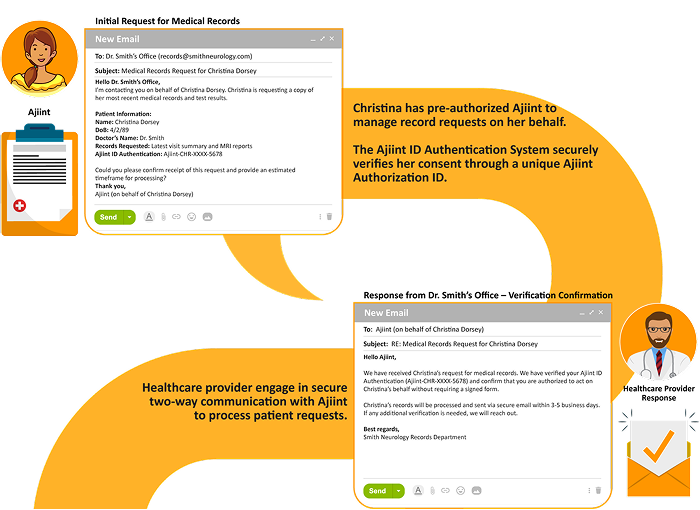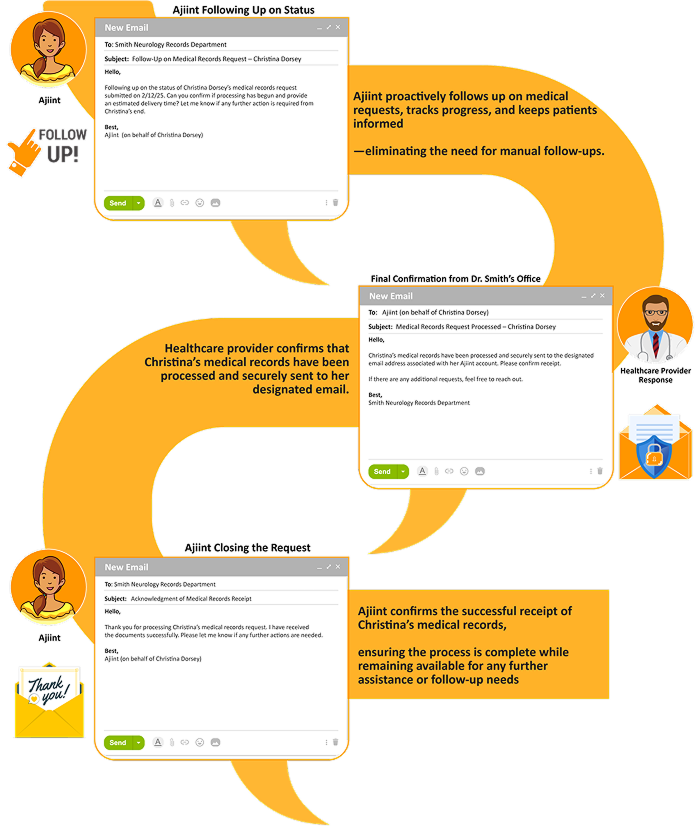
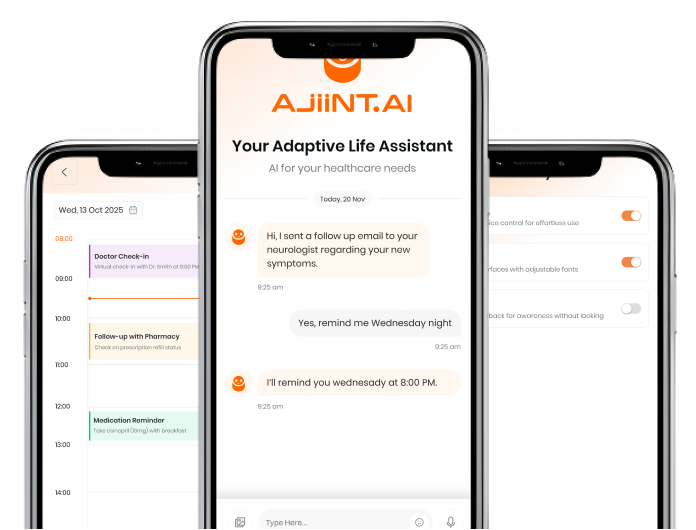
Designed for people living with Multiple Sclerosis and the caregivers who support them
Cognitive Offloading
Helps capture tasks, reminders, and important details so nothing gets lost when memory or energy drops — without requiring constant input.
Daily Context Awareness
Tracks patterns in energy, mood, and daily routines to surface meaningful context — helping users notice what’s changing without constant self-monitoring.
Adaptive Support
Adjusts prompts and support based on changing energy, cognition, and needs — offering less on hard days and more when capacity allows.
Caregiver Visibility
Shares the right context with caregivers when needed, reducing guesswork and burden while preserving autonomy and dignity.
Most Tools Aren’t Built for Cognitive Change
Built for Consistency
Most digital tools assume stable memory, energy, and attention — conditions that don’t reflect life with MS.
Not Adaptive to Cognitive Change
Fatigue, brain fog, and mobility shifts require support that adjusts moment to moment, not one-size-fits-all interactions.
Limited Support for Care Tasks
Everyday care work — reminders, coordination, follow-ups — is often left to the person already carrying the most load.
Accessibility as an Afterthought
Many tools weren’t designed with disability, fluctuating capacity, or caregiver context in mind.
Different Tools, Different Assumptions
| Most Tools | Ajiint |
|---|---|
| Assume stable capacity | |
| Require constant initiation | |
| Focus on tasks or symptoms | |
| Add cognitive load | |
| Accessibility as an add-on | |
| Real Accessibility Focus |
Ajiint Learns, Adapts, and Assists When You Need It Most